
The first adjustment is almost never the most useful one — that's the evaluation. But it's the one most patients are nervous about, so it's worth describing. Here's what actually happens, what it feels like, and how to set yourself up for the 24 hours after.
Before — what we do first
We re-check the regions we identified at the evaluation. If your spine doesn't look the same as it did last visit, we adjust the plan, not the patient. If the muscles around a segment are still locked down, we'll do soft-tissue work first and adjust second.
During — what it feels like
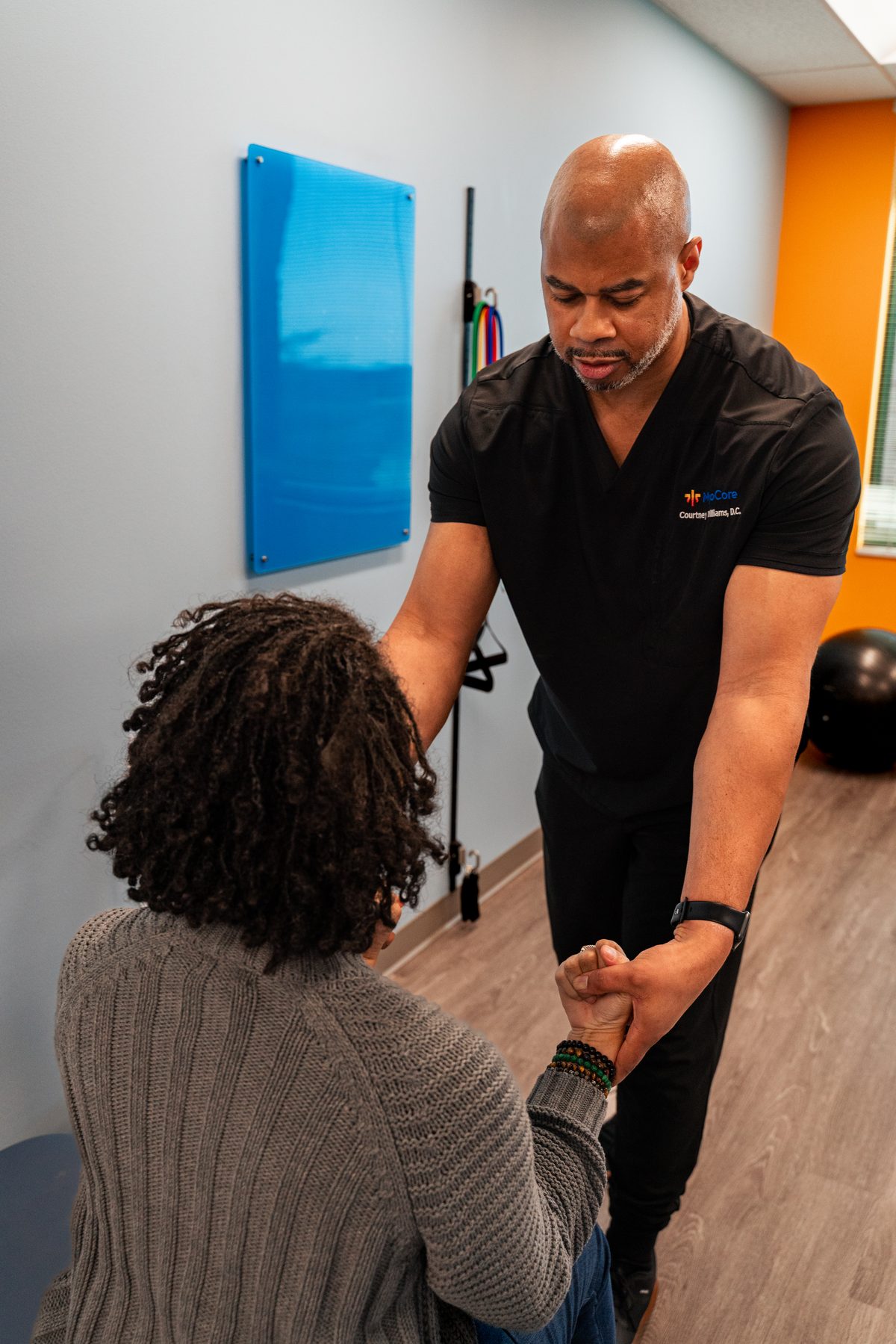
Most adjustments are a quick, low-amplitude thrust at a specific spinal segment. The audible 'pop' (when there is one) is gas releasing from the joint capsule — like cracking a knuckle. It is not bone on bone. For patients who don't want manual cavitation, we use drop-table or instrument-assisted techniques that don't make a sound at all.
After — the next 24 hours
- Drink more water than usual; freed-up tissue moves a lot of metabolic waste
- Walk for 10–15 minutes within an hour of leaving
- Skip the heavy gym session today; light movement only
- Mild soreness for 24–48 hours is normal — sharp pain is not, and we want to hear about it
Common questions
Ready when you are
Book a 108-dollar evaluation.