
MyoCore
(469) 525-5300

Manual chiropractic care

Spinal Adjustments

Hands-on adjustments matched to what your spine actually needs — diversified, drop-table, and instrument-assisted techniques used in combination, never on a script.

No referral required
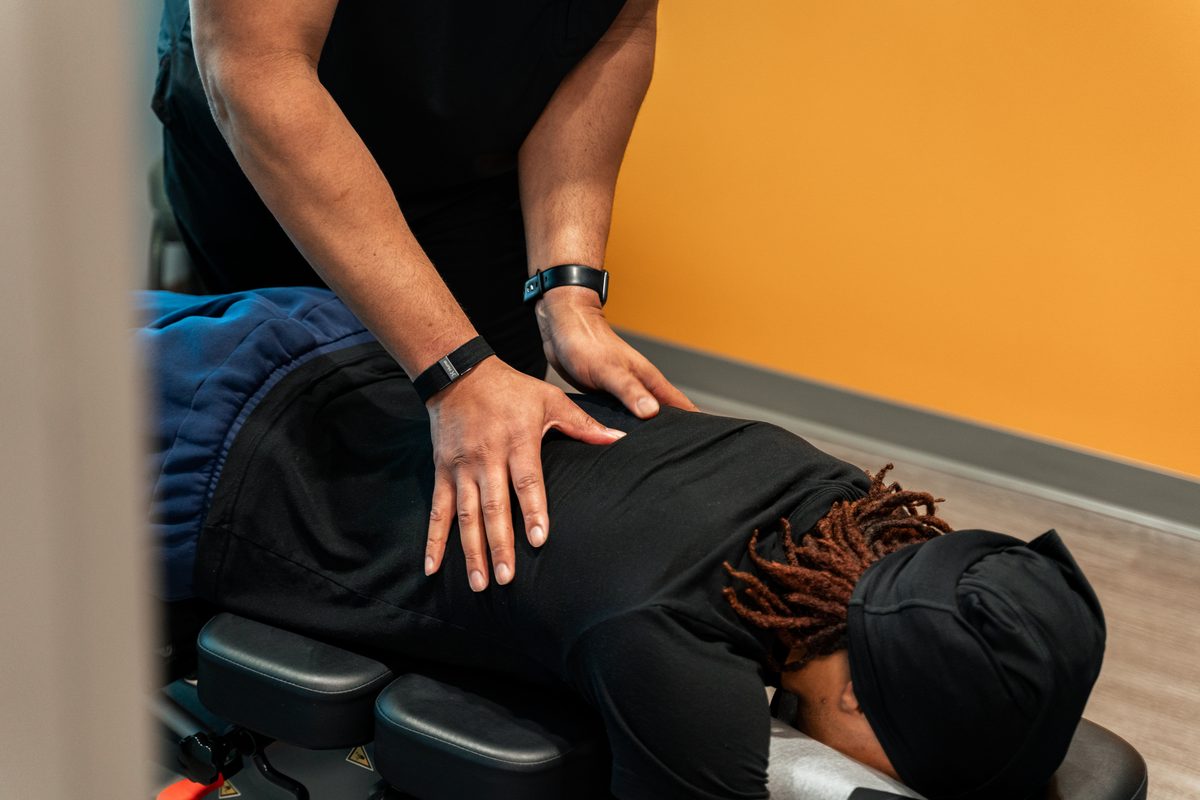
Close-up of a chiropractor's hands performing a precision spinal adjustment

Why this happens

The cause underneath the symptom.

Plain-English on what's actually going on — so the treatment plan makes sense before you commit to it.

Why segments lock up in the first place

Spinal joints are designed to move through small, repeatable arcs. When one segment loses motion — from a tweak, a long stretch of bad posture, or compensation around a stiff hip or shoulder — the segments above and below pick up the slack. Over time the loud, painful spot is rarely the segment that started the problem; it's the one stuck doing too much work.

Why pain comes back when only the symptom is treated

Heat, ice, massage, and percussion guns can quiet the loud segment for a few hours, but the silent one that started the chain is still locked. The system goes right back to compensating, and the symptom comes right back. Restoring motion to the segment that actually started it is what makes results hold.

What we do about it

Three things, in this order.

No 36-visit packages. No mystery techniques. Just the part that actually changes the picture.

01

Find the silent link

Segmental motion testing finds the joint that lost mobility first — usually adjacent to but not the same as where you feel pain.

02

Match technique to spine

Manual diversified, drop-table, or instrument-assisted (Activator / Impulse) — we pick the technique that fits your tolerance and the segment, not a one-size protocol.

03

Lock in the work

Two or three movement and posture cues you do at home so the new motion sticks until the next visit.

What happens during a visit

No mystery. No surprises.

Every visit follows the same honest structure — assess, treat, plan. Here's exactly what to expect.

01

Re-check before we adjust

Quick movement and palpation re-check at every visit so we're treating today's spine, not last week's.

02

Technique matched to the segment

Diversified for the segments that take it well, drop-table for sensitive areas, instrument-assisted (Activator / Impulse) for patients who don't want manual cavitation.

03

Soft tissue first when needed

If the muscles around a segment are locked down, the adjustment won't hold. We'll free up the tissue before we move the joint.

04

What to do between visits

Two or three specific things — a stretch, a movement, a posture cue — that protect the work we just did.

From the library

See it explained, then read the deeper version.

Short videos from Dr. Williams and Dr. Wilson on this exact topic. Each one links to a full article so you can save or share it.

Browse the full library
Why gentle movement is almost always better than complete rest for back pain.
Read full article
Plain-English on glute weakness and chronic low-back pain.
Read full article
Why the technique your chiropractor uses matters more than the title.
Read full article

Conditions we treat

Common reasons patients book this service.

Lower back painNeck painMid-back stiffnessSciaticaSI joint dysfunctionPostural painPinched nervesDisc-related pain

Don't see what you're dealing with? Call us — we'll tell you honestly whether we can help or who to see instead.

Who this is for

A good fit if…

  • You want hands-on care, not just exercises and ice
  • You've had adjustments before and they helped
  • You're nervous about manual adjustments and want a gentler option

Common questions

The questions we hear most.

If yours isn't here, just ask when you call — we don't gatekeep information.

Ready when you are

Start with a $108 evaluation.

Same-day appointments most weeks. We'll be honest if spinal adjustments isn't the right fit and point you somewhere it is.