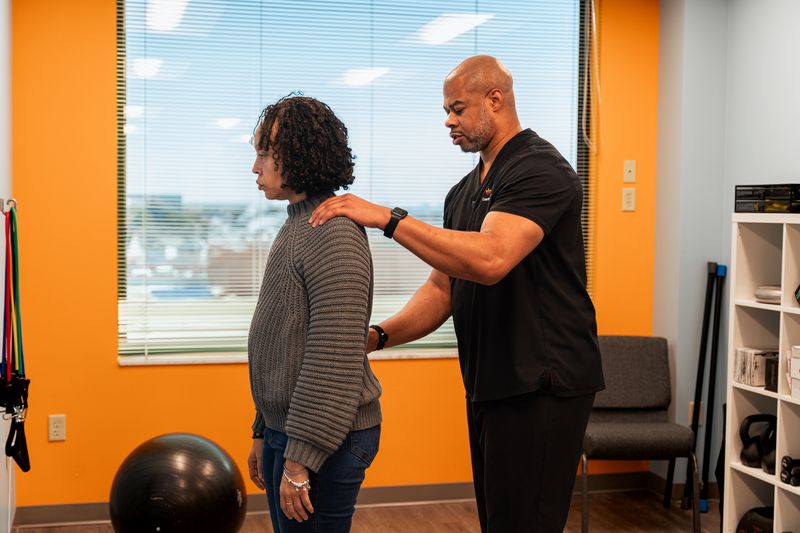

RFQ stands for Regional Functional Quotient. The short version: it's a structured way of looking at how each segment of your spine and each major joint is moving, scoring it against a normal range, and finding the regions that are doing more work than they should because somewhere else is doing less.
Why pain location is misleading
The body is a chain. When one link locks up, the next one has to pick up the slack. Most chronic low back pain isn't a low back problem — it's a hip mobility problem that the lumbar spine is trying to compensate for. Most chronic neck pain is a thoracic spine that stopped rotating, asking the cervical segments to do all the work. We chase the silent link, not the loud one.
What a typical RFQ finds
- Hip extension or rotation deficit driving lumbar facet pain
- Thoracic rotation loss driving cervical and shoulder symptoms
- Ankle dorsiflexion loss driving knee or hip overload
- Asymmetry between sides — usually 15° or more — signaling a joint we need to address before any strengthening protocol will hold
Ready when you are
Book a 108-dollar evaluation.